
Software quality has become a critical success factor in modern software development. As organizations accelerate digital transformation, adopt Agile and DevOps practices, and increasingly integrate Artificial Intelligence into their products, the demand for skilled testing professionals continues to grow. One of the most recognized ways to validate software testing knowledge and skills globally is through the ISTQB® certification scheme.
**What is ISTQB? ** The International Software Testing Qualifications Board (ISTQB®) is the world’s leading certification body for software testing professionals. Since its establishment in 2002, ISTQB has developed a globally recognized framework that provides a common language, standardized best practices, and career development pathways for testers and quality professionals. As of 2025, ISTQB has administered more than 1.5 million exams and issued over 1.1 million certifications across more than 130 countries.
Unlike vendor-specific certifications, ISTQB certifications are technology-neutral and focus on testing principles, methodologies, and professional competencies that can be applied across industries and technologies.
**Why ISTQB Matters ** Organizations today expect quality professionals to possess both theoretical knowledge and practical skills. ISTQB certifications help bridge this gap by providing:
- A globally recognized standard for software testing knowledge
- Consistent terminology across teams and organizations
- Structured career progression for testing professionals
- Increased credibility and professional recognition
- A foundation for continuous learning and specialization
For employers, ISTQB certifications offer confidence that certified professionals understand industry-recognized testing concepts and practices.
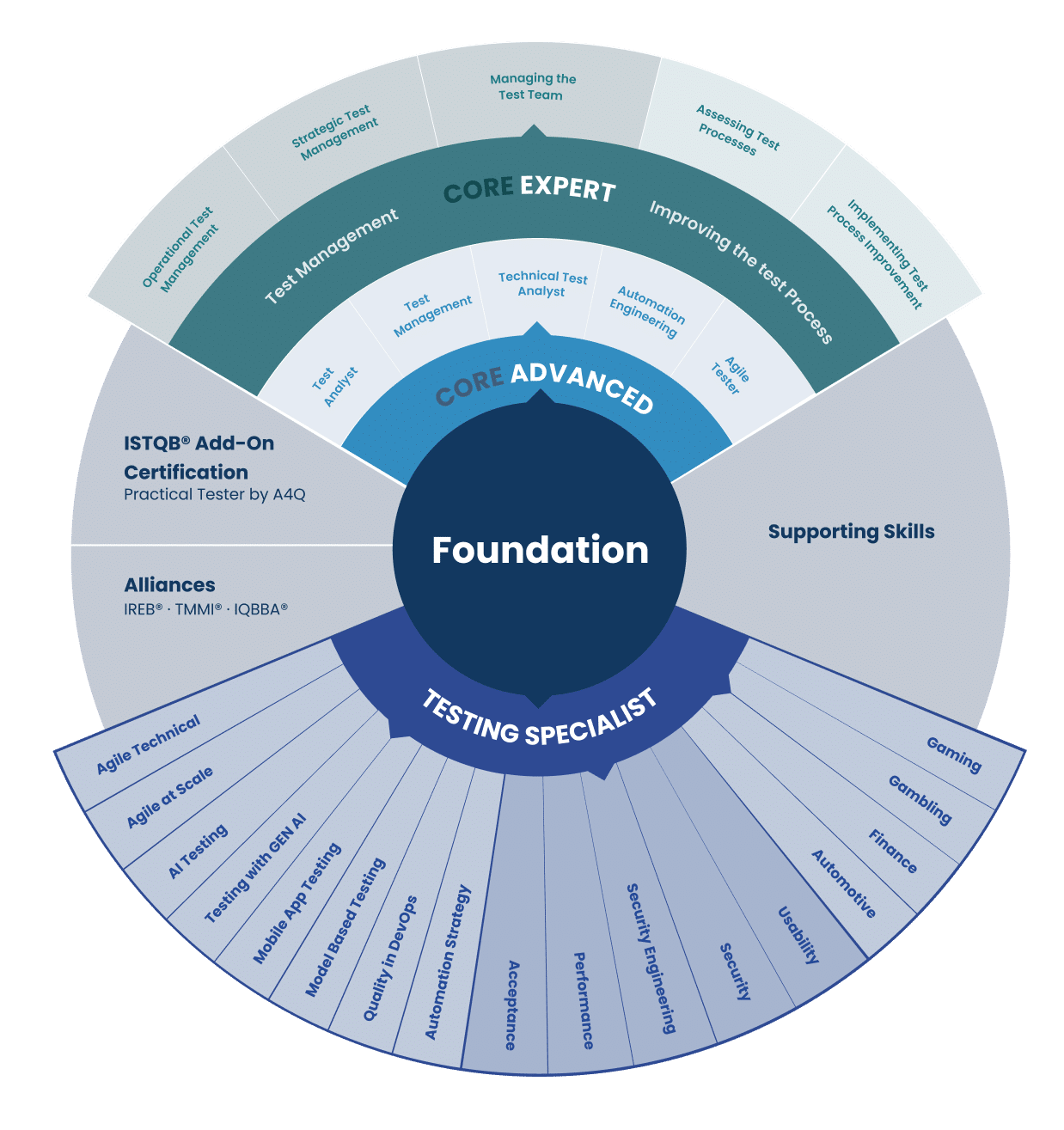
**The Structure of the ISTQB Certification Scheme ** The ISTQB portfolio is organized into multiple levels and streams, allowing professionals to develop expertise according to their career goals and interests. The scheme follows a matrix structure consisting of certification levels and specialized streams.
Foundation Level
The Certified Tester Foundation Level (CTFL) serves as the entry point into the ISTQB certification scheme. It covers fundamental testing concepts, testing throughout the software development lifecycle, test design techniques, test management basics, and tool support.
CTFL is designed for testers, developers, business analysts, project managers, and anyone involved in software quality activities. It also serves as the prerequisite for most advanced certifications within the ISTQB portfolio. (istqb.org)
Advanced Level
The Advanced Level certifications target experienced professionals seeking deeper expertise in specific testing disciplines. Examples include:
- Test Management
- Test Analyst
- Technical Test Analyst
- Agile Tester
These certifications focus on leadership, advanced testing techniques, risk management, automation strategies, and organizational quality practices.
Specialist Certifications
Specialist certifications address emerging technologies and specialized testing domains. Depending on career interests, professionals can pursue certifications in areas such as:
- Test Automation
- Mobile Application Testing
- Security Testing
- AI Testing
- Performance Testing
- Usability Testing
- Automotive Software Testing
These certifications allow practitioners to develop expertise in high-demand areas while complementing their foundational testing knowledge.
Expert Level
The Expert Level represents the highest tier of the ISTQB certification scheme. It focuses on strategic testing leadership, organizational improvement, and advanced test management practices. These certifications are designed for senior testing leaders, consultants, and quality executives.
Choosing the Right Certification Path
A common question among professionals is: “Which certification should I take first?”
For most individuals, the recommended path begins with CTFL. After gaining practical experience, candidates can choose their next certification based on career aspirations:
- Future Test Managers → Advanced Test Management
- Automation Engineers → Test Automation Engineering
- Agile Team Members → Agile Tester
- Security Professionals → Security Testing
- AI Quality Engineers → AI Testing
The flexibility of the ISTQB portfolio allows professionals to build a certification roadmap aligned with their specific career objectives rather than following a single predefined path.
Looking Ahead
Software testing continues to evolve alongside technological innovation. Areas such as AI-assisted testing, test automation, continuous testing, and quality engineering are reshaping the profession. ISTQB continues to expand and update its certification portfolio to address these emerging industry needs while maintaining a strong foundation in testing principles.
For professionals seeking to establish or advance a career in software quality, the ISTQB certification scheme provides a structured and globally recognized roadmap for continuous learning and professional growth.
In future articles, we will explore individual certifications in more detail, discuss preparation strategies, and examine how software testing careers are evolving in the age of AI and Quality Engineering.
You must log in or # to comment.